
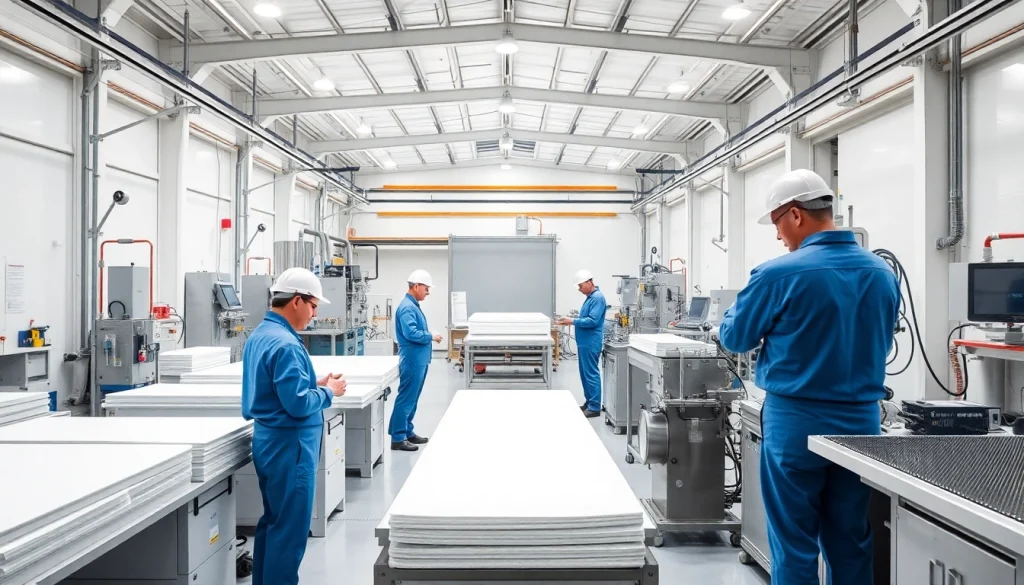
What is a GRP Manufacturer?
Definition and Importance
A GRP Manufacturer is a company that specializes in the production of Glass Reinforced Plastic (GRP) parts and products, utilizing advanced techniques to create durable, lightweight, and corrosion-resistant materials. These manufacturers play a critical role in the composites industry, addressing a diverse range of applications across various sectors. The importance of GRP manufacturers stems from their ability to enhance product performance while reducing the overall weight of the materials used in construction and manufacturing processes.
Key Functions of GRP Manufacturers
GRP manufacturers are responsible for a variety of key functions, including:
- Design and Development: Collaborating with clients to innovate and design custom GRP solutions tailored to specific industry needs.
- Production: Employing state-of-the-art technology and processes to manufacture high-quality GRP products efficiently.
- Quality Assurance: Implementing rigorous testing and inspection protocols to ensure that products meet industry standards and client specifications.
- Research and Development: Continuously improving materials and manufacturing processes to enhance performance and sustainability.
Materials Used in GRP Production
The primary materials used in the production of GRP include:
- Fiberglass: A core component providing strength and resilience.
- Resins: Such as polyester or epoxy resins, which serve as the matrix for bonding the fiberglass layers.
- Additives: Various additives may be used to improve UV stability, fire resistance, or coloring properties.
The GRP Manufacturing Process
Steps Involved in GRP Production
The GRP manufacturing process generally includes the following steps:
- Mold Creation: Designing and creating molds that will shape the final product.
- Surface Preparation: Preparing the mold surface to ensure proper adhesion and finish.
- Material Layup: Layering fiberglass and applying resin in the mold.
- Curing: Allowing the product to cure, often in a controlled environment, to ensure complete hardening.
- Finishing: Trimming and finishing the product to meet specifications.
- Inspection: Conducting thorough quality checks to ensure all standards are met.
Technology and Equipment in Manufacturing
Modern GRP manufacturing employs various technologies and equipment, including:
- Automated Layup Systems: To increase efficiency and consistency in the material application process.
- CNC Machines: For precise cutting and shaping of molds and finished products.
- Robotic Arms: Used for handling heavy material sheets during production.
- Quality Testing Equipment: Ensuring that the products meet required mechanical and aesthetic standards.
Quality Control Measures
Quality control is paramount in GRP production. Key measures include:
- Material Testing: Assessing raw materials for quality prior to production.
- In-Process Inspection: Frequent checks during manufacturing to catch defects early.
- Final Product Testing: Comprehensive assessments of the finished GRP products under various conditions.
Applications of GRP Products
Industries Utilizing GRP
GRP products are employed across numerous industries, including:
- Construction: For elements like roofing, facades, and structural components.
- Transportation: In components for vehicles, boats, and even aerospace applications.
- Electrical: Used in insulation and housing for electrical components.
- Marine: For boats, yachts, and marine fittings due to their water resistance.
Examples of GRP Applications
Some specific examples of GRP applications encompass:
- Tank Linings: GRP is often used in chemical storage tanks owing to its resistance to corrosion.
- Reinforced Pipes: Delivering superior durability and longevity in sewage and water pipelines.
- Roofing Systems: Used in commercial buildings for waterproofing and thermal insulation.
Benefits of Using GRP
The benefits of utilizing GRP in various applications include:
- Lightweight: GRP products are significantly lighter than traditional fittings, facilitating easier transportation and installation.
- Corrosion Resistance: Ideal for environments prone to corrosion or chemical exposure.
- Design Flexibility: Easily molded into intricate shapes and custom designs.
Challenges Faced by GRP Manufacturers
Supply Chain and Environmental Considerations
GRP manufacturers encounter challenges related to supply chain logistics, particularly concerning the sourcing of raw materials. Fluctuations in material availability can impact production schedules. Additionally, manufacturers must also consider environmental regulations as the production of GRP can involve chemical procedures that may raise ecological concerns.
Technological Advancements Impacting the Industry
As technology evolves, GRP manufacturers face the challenge of staying at the forefront of innovation. New machining techniques, advanced materials, and enhancement in curing processes present both opportunities and hurdles. Adapting to these changes is crucial for maintaining competitive advantage in the market.
Regulatory Challenges
Regulatory compliance is another ongoing challenge for GRP manufacturers. They must navigate local, national, and international regulations concerning health, safety, and environmental impact. Adapting to changing regulations can strain resources and require continuous training for staff.
Future Trends for GRP Manufacturers
Innovations in Materials and Techniques
The future of GRP manufacturing lies in innovation. New materials, such as bio-based resins and improved fiberglass technology, are emerging. Likewise, techniques such as 3D printing are beginning to influence how GRP products are designed and produced, enhancing customization capabilities and efficiency.
Industry Growth Projections
Industry analysts predict a stable growth trajectory for the GRP market driven by increasing demand in sectors such as construction, transportation, and renewable energy. The need for lightweight, durable materials that can withstand harsh environments will further propel the industry’s expansion.
Strategies for Competitive Advantage
For GRP manufacturers to enhance their competitive edge, they should focus on maximizing operational efficiencies, investing in R&D, and fostering close customer relationships. Continuous training and adaptation to new technologies will also be imperative in staying ahead in the evolving landscape of the composites market.
Frequently Asked Questions
1. What does GRP stand for?
GRP stands for Glass Reinforced Plastic, a composite material made from glass fibers and resin.
2. What are the main benefits of GRP?
GRP offers lightweight properties, excellent corrosion resistance, and design versatility, making it ideal for various applications.
3. How is GRP produced?
The production involves creating molds, layering fiberglass with resin, curing the material, and performing quality inspections.
4. In which industries is GRP commonly used?
GRP is widely used in construction, transportation, electrical, and marine industries for diverse applications.
5. What challenges do GRP manufacturers face?
Challenges include supply chain issues, regulatory compliance, and adapting to technological advancements in the industry.