Understanding Bridge Cranes
In the ever-evolving industrial landscape, the need for efficient material handling solutions is paramount. Among these, the bridge crane stands out as a crucial asset in various sectors, from manufacturing to warehouse operations. These cranes are designed to handle heavy loads with precision, effectively improving workflow and productivity. This article dives deep into the world of bridge cranes, exploring their components, types, benefits, maintenance practices, regulations, and future trends.
What is a Bridge Crane?
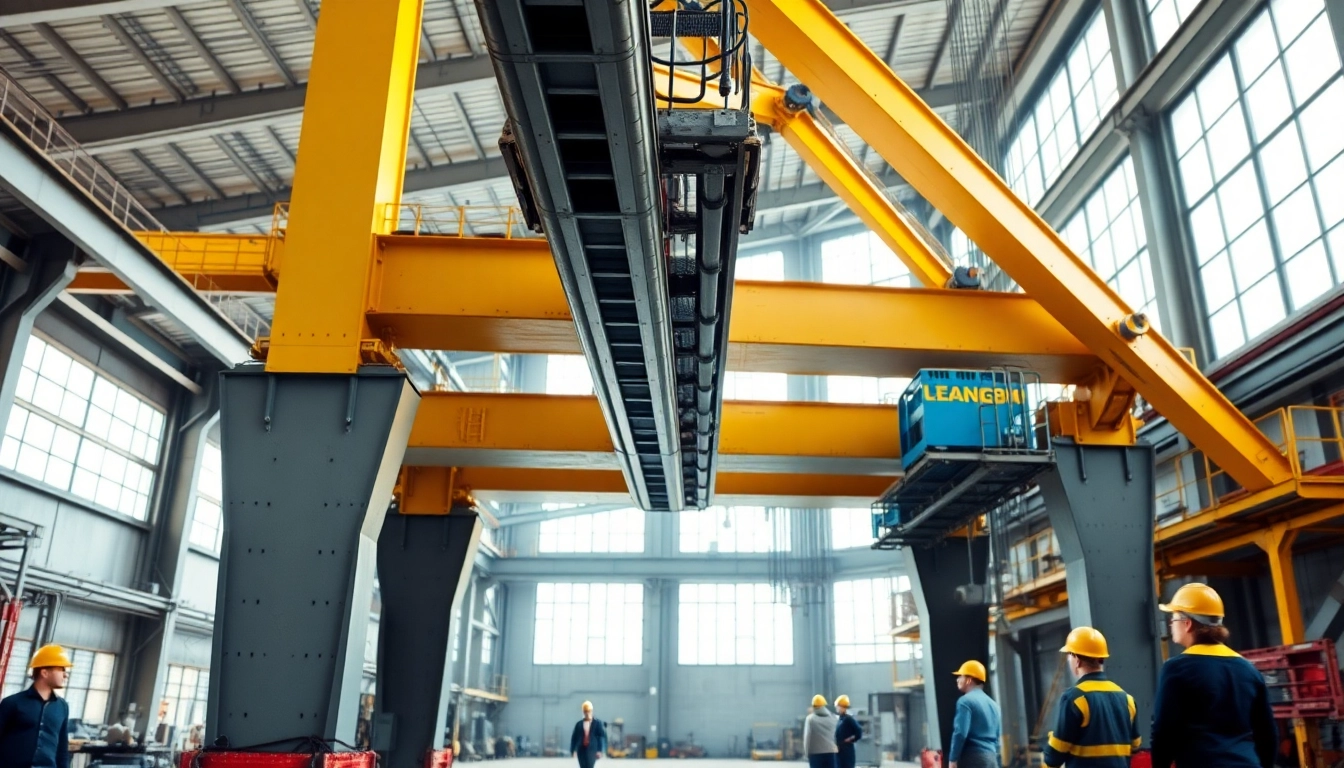
Bridge cranes, commonly referred to as overhead cranes, are characterized by a hoist that is mounted on a bridge that spans the distance between two parallel runways. This design allows the crane to traverse the entire area beneath it, making it incredibly versatile in industrial settings. Typically installed in factories, warehouses, and workshops, these cranes can lift large materials and transport them efficiently across extensive distances, which is essential for operations involving heavy loads.
Key Components of Bridge Cranes
Understanding the components of bridge cranes is essential for optimizing their functionality. Here are the primary components:
- Bridge Beam: The main horizontal support structure that spans the two runways.
- Hoist: This is the device used to lift and lower loads, typically featuring a drum and a rope or chain.
- Runways: The tracks that support the movement of the bridge crane, which can be ceiling-mounted or floor-mounted.
- Controls: Systems that allow operators to maneuver the crane and its hoist safely.
Types of Bridge Cranes and Their Applications
Bridge cranes come in various types, each designed for specific applications. The most common varieties include:
- Single Girder Cranes: Ideal for lighter loads and lower heights, these cranes provide a cost-effective solution for smaller operations.
- Double Girder Cranes: Suitable for heavier loads and wider spans, these cranes offer greater stability and flexibility.
- Underhung Cranes: These are mounted on ceiling tracks, allowing for space savings and optimal use of warehouse height.
- Freestanding Cranes: These are supported by their own structure and can be placed anywhere in the work area.
Benefits of Using Bridge Cranes
Efficiency in Material Handling
Bridge cranes are integral in enhancing material handling efficiency. By reducing the need for manual lifting and transporting, they minimize workplace injuries and accelerate workflow. Their ability to easily move heavy loads across vast spaces means that operations can run smoother, leading to increased throughput.
Cost-Effectiveness for Industrial Operations
Investing in a bridge crane can significantly reduce operational costs in the long run. They are designed for durability and longevity, and their efficiency can lead to reduced labor costs and less downtime. Moreover, bridge cranes facilitate space utilization, allowing manufacturers to optimize their production areas.
Enhancing Workplace Safety with Bridge Cranes
Safety is a top priority in any industrial setting. Bridge cranes come equipped with various safety features, including limit switches, emergency stop buttons, and overload protection systems. These features are designed to prevent accidents and ensure that lifting operations are conducted with maximum safety.
Installation and Maintenance Best Practices
Steps for Installing a Bridge Crane
Proper installation is key to the effective operation of a bridge crane. Here are crucial steps to follow:
- Site Assessment: Evaluate the work area to determine the best location for the crane, considering factors like load requirements and space availability.
- Structural Preparation: Ensure that the structure can support the crane's weight and load capacity through proper engineering assessments.
- Assembly: Assemble the crane components according to the manufacturer's guidelines, ensuring that all parts are correctly secured.
- Testing: After installation, conduct a series of operational tests to confirm that the crane operates smoothly.
Routine Maintenance Strategies for Longevity
To ensure a bridge crane operates efficiently over its lifespan, regular maintenance is essential. This includes:
- Conducting daily visual inspections to identify any apparent issues.
- Performing regular lubrication of moving parts to reduce wear.
- Scheduling periodic professional inspections and maintenance checks to ensure compliance with safety standards.
Common Issues and Troubleshooting Tips
While bridge cranes are designed for durability, issues can still arise. Common problems include:
- Noise during Operation: This may indicate a need for lubrication or a potential mechanical issue.
- Inconsistent Lifting: This could be a sign of hoist malfunction or load imbalances that need to be addressed.
- Electrical Failures: Regularly check electrical systems and connections to prevent malfunctions.
Regulations and Safety Standards
Industry Regulations Affecting Bridge Cranes
Bridge cranes are subject to various industry regulations aimed at ensuring safety and reliability. Compliance with standards set by organizations such as OSHA (Occupational Safety and Health Administration) and ANSI (American National Standards Institute) is mandatory. These regulations dictate installation, maintenance, and operation procedures.
Safety Protocols in Crane Operations
Implementing safety protocols is crucial for crane operations. Operators should be trained in safe lifting practices, and facilities must have clear signage and communication systems in place. Regular safety drills and proper personal protective equipment (PPE) usage are also mandatory.
Training Requirements for Operators
Operators must undergo extensive training before they can operate a bridge crane. Training programs should cover:
- Crane operation techniques.
- Understanding load capacities and dynamics.
- Emergency procedures and safety protocols.
Future Trends in Bridge Crane Technology
Emerging Technologies Impacting Bridge Cranes
The bridge crane industry is witnessing technological advancements that enhance performance and safety. Innovations such as IoT connectivity are enabling predictive maintenance and real-time monitoring, greatly benefiting operators by minimizing downtime and improving decision-making.
Automation and Smart Crane Systems
Automation is becoming a significant trend, with smart crane systems that can perform tasks without human intervention. These systems utilize artificial intelligence for efficient operation, improving productivity while minimizing human error.
Predictions for Bridge Cranes in 2025 and Beyond
As industries continue to evolve, the demand for more advanced bridge cranes will increase. By 2025, it is anticipated that bridge cranes will incorporate more integrated safety features, improved energy efficiency, and enhanced automation capabilities that will transform material handling operations across various sectors.