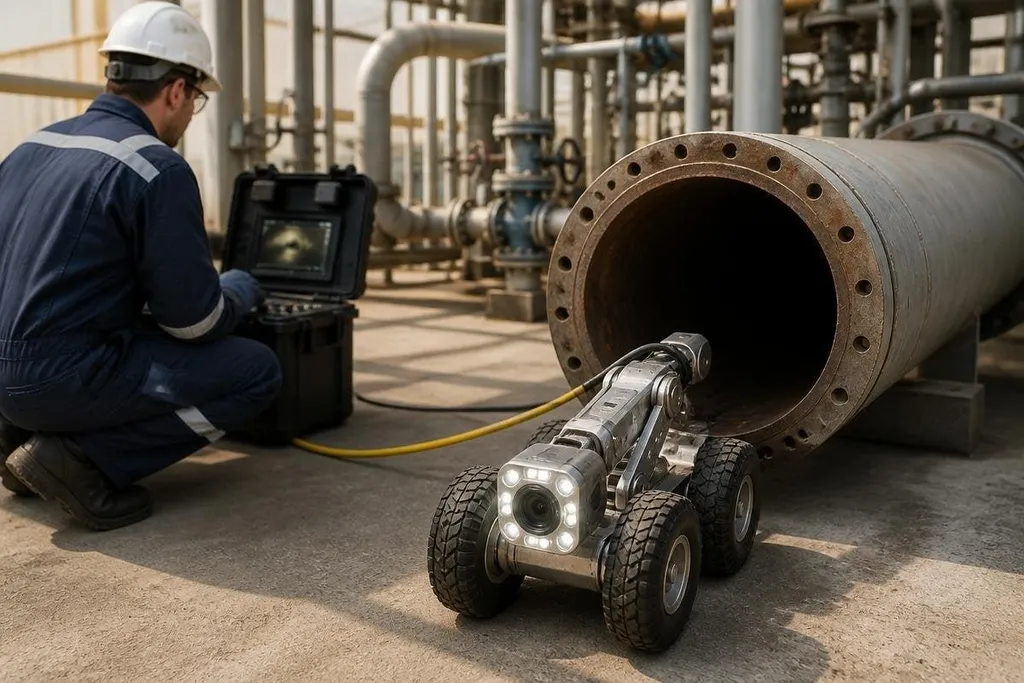
A camera on wheels can enter a hot pipe corridor before a technician does. Inspection robots help find heat, gas leaks, loose parts, and blocked routes while people stay outside the hazard zone.
For plant managers, the useful question is practical: where can a robot collect better warning signs, and where must a person still make the call?
- Thermal cameras can find hot bearings, motors, and electrical panels.
- Gas sensors and microphones can detect leaks or unusual machine noise.
- LiDAR and cameras can map blocked paths, damaged structures, and open doors.
What the robot checks
Inspection robots carry sensors suited to the site. A thermal camera measures surface heat, while a gas sensor checks for compounds that people may not smell in time. A microphone can pick up changes in a pump or gearbox before the damage is visible.
LiDAR can also send out laser pulses to measure distance. That helps the robot build a map of walls, pipes, stairs, and other fixed objects. Cameras add visual detail, such as a missing guard or a spill on the floor.
The value comes from repeated checks in places that are hard, slow, or unsafe to reach. A robot can return to the same pump, valve, or conveyor route and compare new readings with earlier ones. A change in heat or vibration then gives a maintenance team a clear reason to inspect the part.
That process does not remove risk by itself. The system has to spot the warning sign, send it to the right person, and trigger a safe response before the condition gets worse.
How a warning becomes safer work
A useful inspection system links the robot's reading to a work rule. A gas reading may send an alert and stop entry to an area. A hot motor may create a maintenance ticket. A blocked route may send a map and image to the site control room.
The alert also needs context. A temperature reading without the motor's location, recent readings, and operating state gives a technician less to work with. The robot should record where it was, what it measured, and when it measured it.
Human review still matters. A sensor can report heat from a normal process, a reflection, or a nearby source. A person with knowledge of the plant must decide whether to shut down equipment, send a team, or schedule a check during planned maintenance.
A polished demo can't tell a plant manager whether a robot can inspect that site through a full shift. Robot24.com inspection robotics reporting names the machine, plant, task, and test date before the next section looks at where inspection robots fall short.
Where inspection robots fall short
A robot cannot see every hazard. Smoke, water, dust, poor lighting, reflective metal, and narrow spaces can reduce sensor quality.
Wheels may struggle on steps, cables, wet floors, or damaged surfaces. A drone faces its own limits around airflow, battery time, and safe operation near people.
Safe routes and recovery plans matter too. If it loses communication, gets stuck, or reports a false alarm, staff need a known way to reach it without entering danger blindly. That may mean a second robot, a fixed camera, a manual inspection point, or a controlled shutdown.
Alarm fatigue creates another risk. If the system sends too many warnings, staff may stop treating each one as urgent. Set alert levels from plant rules and test them with real operating conditions before using them for safety decisions.
I’d treat an inspection robot as an extra set of sensors, not as the person responsible for safety.
A practical buying checklist
Use these questions before choosing a robot or starting a site trial:
- Name the hazards: list heat, gas, noise, vibration, dust, water, and access limits.
- Match the sensors: check the thermal range, gas types, camera view, microphone range, and LiDAR performance.
- Test the route: run the robot across the actual floors, ramps, doors, lighting, and network areas.
- Set the response: decide who receives each alert and what action follows it.
- Plan failure recovery: define what staff do when the robot stops, loses its link, or gives a doubtful reading.
- Review the records: check whether reports show the location, time, reading, and image needed for a safe decision.
The next useful step is a small route with a known machine and a clear inspection task. Measure whether the robot finds a real change, sends the alert to the right person, and keeps people away from the hazard while they investigate.